October 06 - Adsorption School
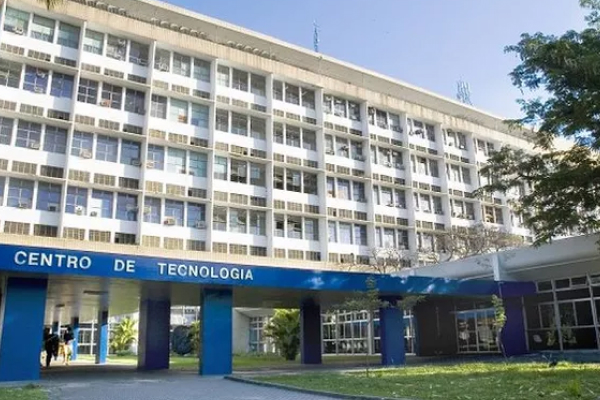
Venue: Centro de Tecnologia
Cidade Universitária - Av. Athos da Silveira Ramos, 149 - Ilha do Fundão ; CEP: 21941-909
 REGISTRATION PT
The Brazilian Meeting on Adsorption is a conference that connects the scientific, academic, and industrial communities related to the Adsorption field in Brazil and abroad.
This relevant event seeks to create interaction between the R&D groups and national/international companies, sharing recent advances and encouraging networking among researchers in the field.
Venue: Centro de Tecnologia
Cidade Universitária - Av. Athos da Silveira Ramos, 149 - Ilha do Fundão ; CEP: 21941-909
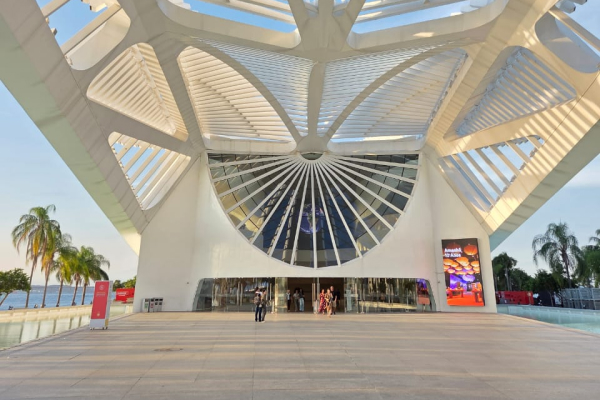
Venue: MUSEU DO AMANHÃ
Praça Mauá, 1 - Centro, Rio de Janeiro - RJ CEP 20081-240
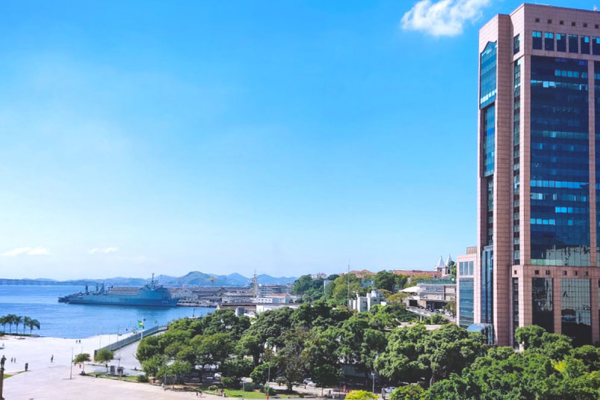
Venue: Centro de Convenções RB1
Avenida Rio Branco, nº 1, no bairro do Centro, Rio de Janeiro - RJ CEP: 20090-003
Venue: Centro de Convenções RB1
Avenida Rio Branco, nº 1, no bairro do Centro, Rio de Janeiro - RJ CEP: 20090-003
Adsorption School
| Horário | Atividade / Palestra | Palestrante & Instituição / Patrocinador |
|---|---|---|
| 08:00 – 09:00 | Registration & Welcome Coffee | ___ |
| 09:00 – 09:30 | Opening Ceremony | — |
| 09:30 – 10:30 | Plenary I: Sorbents and Process Intensification to Advance in CO₂ capture and Utilization | Diana Azevedo (Universidade Federal do Ceará) |
| 10:30 – 11:30 | Plenary II: Adsorption at Interfaces and Contact Lines: From Molecular Oversolubility to Macroscopic Wetting | Benoît Coasne (Université Grenoble Alpes) |
| 11:30 – 12:30 | Plenary III: Molecular Sieves: Engineering Porosity for Efficient Adsorption and Chemical Conversion | Sibele Pergher (Universidade Federal do Rio Grande do Norte) |
| 12:30 – 14:00 | Lunch | — |
| 14:00 – 15:00 | Plenary IV: Effect of Confinement on the Adsorption, Phase and Wetting Behaviour of Fluids: Recent Progress in the Pore Network and Surface Characterization of Nanoporous Materials | Matthias Thommes (Friedrich-Alexander-Universität Erlangen-Nürnberg) |
| 15:00 – 16:15 | Roundtable - Energy transition and decarbonization of energy production - Natural gas and low-carbon-emission hydrogen | Cristiane Sampaio (Agência Nacional do Petróleo, Gás Natural e Biocombustíveis - ANP), Dárley Carrijo (Cenpes/Petrobras) and Giovani Machado (Associação Brasileira do Hidrogênio - ABH2) |
| 16:15 – 16:30 | Sponsor Presentation | TPS Brasil/Chandler Engineering-Ametek |
| 16:30 – 18:00 | Poster Session I | — |
| 15:00 – 17:00 | EBA POP - Science Outreach Activities | — |
| 17:30 – 19:00 | Cocktail and Group Photo (-) (in parallel) | — |
| Horário | Atividade / Palestra | Palestrante & Instituição / Patrocinador |
|---|---|---|
| 08:00 – 09:00 | Plenary V: Advancements in Magnetic Sorbents and Magnetically Induced Swing Adsorption | Fateme Rezaei (University of Miami) |
| 09:00 – 09:10 | Sponsor Presentation | Anton Paar |
| 09:10 – 09:40 | Keynote Session 1 (Sala A): Transferable Force Fields for Porous Materials: Is it a Possible Dream? | Lucienne Romanielo (Universidade Federal de Uberlândia) |
| 09:10 – 09:40 | Keynote Session 1 (Sala B): Unravelling Adsorption and Reaction Mechanisms in Heterogeneous Catalysis with XAS and BCDI | Amélie Rochet (Laboratório Nacional de Luz Síncrotron) |
| 09:40 – 10:10 | Keynote Session 1 (Sala A): Artificial Intelligence for Adsorption-based Processes | Idelfonso Nogueira (Norwegian University of Science and Technology) |
| 09:40 – 10:10 | Keynote Session 1 (Sala B): Adsorption: From Separation Processes to Understanding Biological Interfaces | Marisa Masumi Beppu (Universidade Estadual de Campinas) |
| 10:10 – 11:30 | Coffee Break and Poster Session II | — |
| 11:30 – 12:30 | Plenary VI: Electrifying Adsorption Processes: New Regeneration Strategies for CO₂ Capture and Water Harvesting | Alexandre Ferreira (Universidade do Porto) |
| 12:30 – 12:40 | Sponsor Presentation | General Lab |
| 12:40 – 14:00 | Lunch | — |
| 14:00 – 14:30 | Parallel Keynote Session 2 (Room A): Enhancing Adsorption Process Understanding by Model Based Strategies | Karen Valverde Pontes Vater (Universidade Federal da Bahia) |
| 14:00 – 14:30 | Parallel Keynote Session 2 (Room B): Layered Double Hydroxides as Adsorbent Materials: Advances, Challenges and Future Perspectives | Lucas Meili (Universidade Federal de Alagoas) |
| 14:30 – 15:30 | Parallel Oral Session I (Room A): Process Modeling and Simulation | — |
| 14:30 – 15:30 | Parallel Oral Session I (Room B): Synthesis and Characterization | — |
| 15:30 – 16:00 | Parallel Keynote Session 3 (Room A): Exploring Alternative Techniques to Study Diffusion and Adsorption in Nanoporous Materials using Molecular Dynamics | André Muniz (Universidade Federal do Rio Grande do Sul) |
| 15:30 – 16:00 | Parallel Keynote Session 3 (Room B): From Fundamentals to Application: Adsorption as the Universal Language of Interfacial Engineering | Helen Conceição Ferraz (Universidade Federal do Rio de Janeiro) |
| 16:00 – 16:30 | Parallel Keynote Session 3 (Room A): Adsorption at Different Scales: from Molecules to Process | Luiz Fernando Mercier Franco (Universidade Estadual de Campinas) |
| 16:00 – 16:30 | Parallel Keynote Session 3 (Room B): From milligrams to Tens of Grams: Challenges in Scaling up Adsorbent Technologies | Leandro Vinícius Alves Gurgel (Universidade Federal de Ouro Preto) |
| 16:30 – 17:00 | Tribute Session | — |
| 17:00 – 19:00 | Optional Social Event | — |
| Horário | Atividade / Palestra | Palestrante & Instituição / Patrocinador |
|---|---|---|
| 08:00 – 09:00 | Plenary VII: Coupling Adsorption and Mechanics: An Ultrasonic and Dilatometric Study of Water in Nanoporous Glass | Gennady Gor (New Jersey Institute of Technology) |
| 09:00 – 09:10 | Sponsor Presentation | Honeywell Technologies |
| 09:10 – 09:40 | Extra Keynote Session (Room A): From Natural Gas to Hydrogen: An Adsorption Journey Through Energy Storage | Moises Bastos Neto (Universidade Federal do Ceará) |
| 09:40 – 10:10 | Parallel Oral Session II (Room A): Energy | — |
| 09:10 – 10:10 | Parallel Oral Session II (Room B): Environment and Sustainability | — |
| 10:10 – 11:30 | Coffee Break and Poster Session III | — |
| 11:30 – 12:00 | Parallel Keynote Session 4 (Room A): When Pollutants Travel Together: The Role of Microplastics in Transporting Contaminants | Nathalia Salles Vernin (Universidade do Estado do Rio de Janeiro) |
| 11:30 – 12:00 | Parallel Keynote Session 4 (Room B): Graphene: a Multifunctional Platform | Maurício Alves de Motta Sobrinho (Universidade Federal de Pernambuco) |
| 12:00 – 12:30 | Parallel Keynote Session 4 (Room A): The Revolution of Matter Simulation Applied to Adsorption: Accelerating the Discovery of New Adsorbents | Luciano Costa (Universidade Federal Fluminense) |
| 12:00 – 12:30 | Parallel Keynote Session 4 (Room B): Rational Design of Activated Carbons: Aligning the Synthesis Methodology with the Target Application | Marcos Juliano Prauchner (Universidade de Brasília) |
| 12:30 – 14:00 | Lunch | — |
| 14:00 – 15:00 | Parallel Oral Session III (Room A): Molecular Modeling and Simulation | — |
| 14:00 – 15:00 | Parallel Oral Session III (Room B): CO2 Capture | — |
| 15:00 – 16:30 | Coffee Break and Poster Session IV | — |
| 16:30 – 17:30 | Plenary VIII: The Challenge of CO₂/H₂O Co-adsorption for Point-Source and Direct Air Capture | Arvind Rajendran (University of Alberta) |
| 17:30 – 18:00 | Closing Session | — |
Students: R$ 500 | Professors, Researchers, and Professionals: R$ 1100
Students: R$ 600 | Professors, Researchers, and Professionals: R$ 1200
Students: R$ 800 | Professors, Researchers, and Professionals: R$ 1500